
Best AI for Homeschooling Dyslexic Kids (Parent-Tested Tools That Actually Help)
Homeschooling a child with dyslexia can feel exhausting, especially when reading, spelling, and writing turn into daily battles.
As a homeschool parent, I’ve learned this the hard way:
👉 Dyslexic kids are smart, capable learners-they just process information differently.
The right AI homeschool tools don’t “fix” dyslexia, but they remove learning barriers, reduce frustration, and help kids learn with confidence.
In this guide, you’ll discover the best AI for homeschooling dyslexic kids, how parents actually use these tools at home, and which ones work best for reading, writing, and comprehension.
Who This Guide Is For
This article is best for:
- Homeschool parents teaching dyslexic kids (ages 6-14)
- Children struggling with reading fluency, spelling, or written expression
- Parents looking for AI support tools, not replacements for teaching
❌ This guide is not for parents who want AI to replace homeschooling or human guidance.
What Is Dyslexia and Why Traditional Homeschooling Is Hard
Dyslexia affects how children:
- Decode words
- Recognize letter sounds
- Process written language
In a homeschool setting, this often leads to:
- Slow reading progress
- Writing frustration
- Low confidence and burnout
That’s where AI tools for dyslexic students can help by adapting content to how the child learns best.
How the Best AI for Homeschooling Dyslexic Kids Works
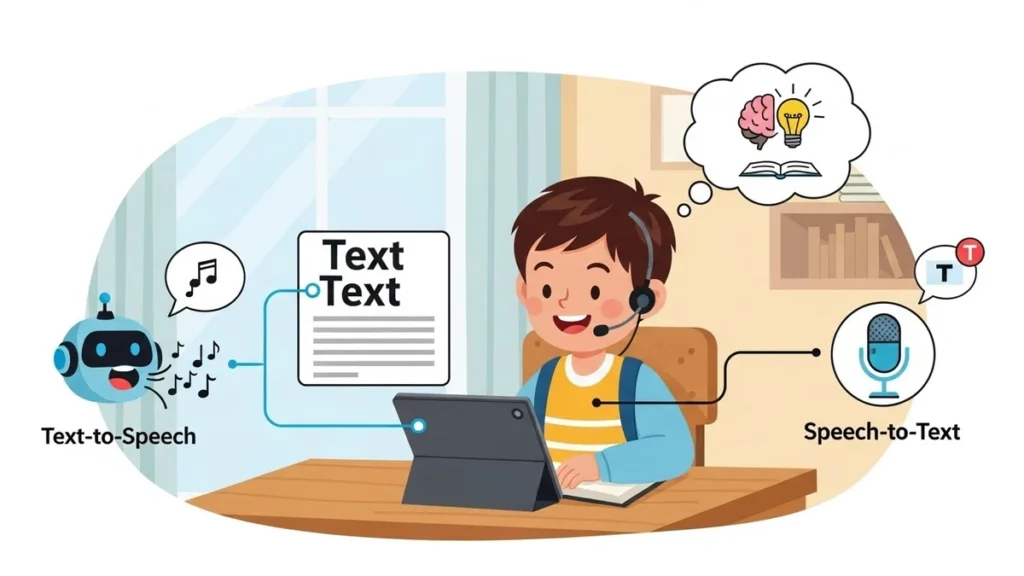
AI works especially well for dyslexia because it can:
- Convert text to speech (listening instead of decoding)
- Support speech-to-text writing
- Break lessons into smaller, manageable steps
- Allow kids to learn at their own pace
Used correctly, AI homeschool tools for dyslexia reduce stress for both kids and parents.
Best AI Tools for Homeschooling Dyslexic Kids
Speechify – Best AI Reading Tool for Dyslexic Kids
Best for: Reading textbooks, worksheets, online lessons
Age: 7+
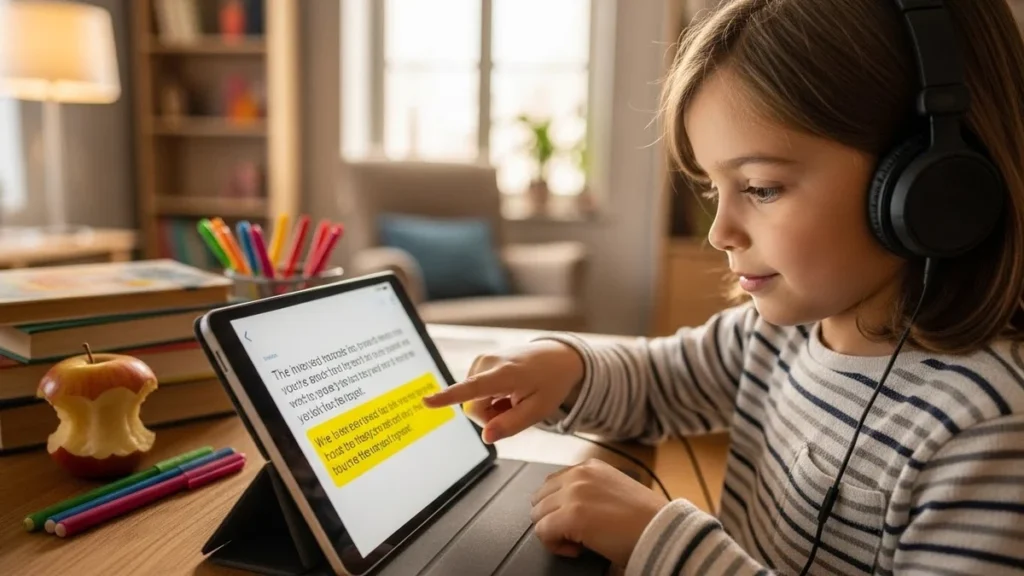
Reading is often the biggest challenge for dyslexic learners. Speechify helps by reading text aloud in a natural voice.
Why parents use it
- Kids can listen instead of struggling to decode text
- Improves comprehension and focus
- Builds confidence quickly
Parent tip:
Have your child follow along visually while listening-this strengthens word recognition over time.
WordQ – Best Writing Support Tool for Dyslexia
Best for: Spelling, sentence building, writing assignments
Age: 8+
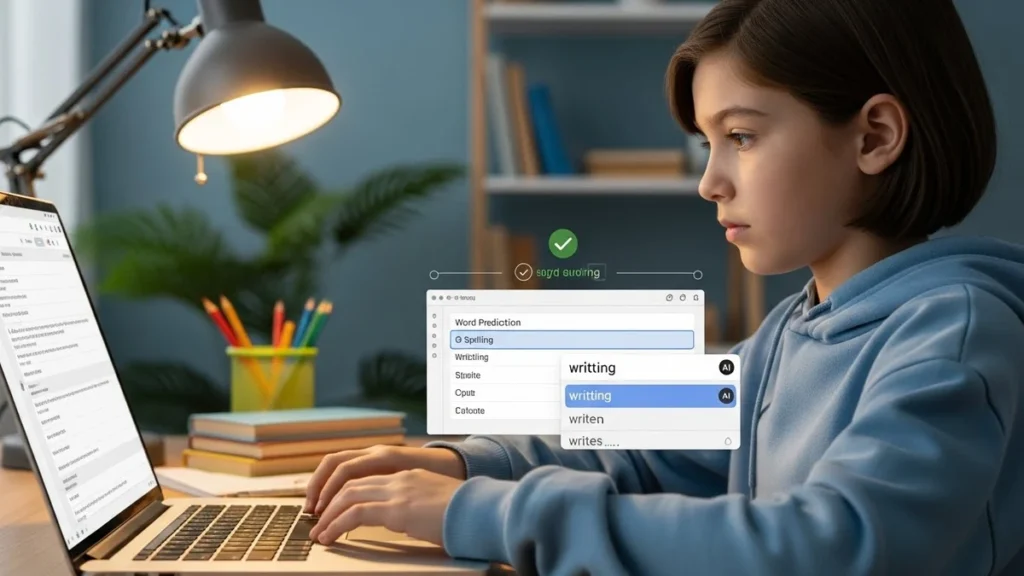
Writing can feel overwhelming for dyslexic kids. WordQ reduces that stress by:
- Predicting words while typing
- Offering spelling corrections
- Reading typed sentences aloud
This allows kids to focus on ideas, not spelling mistakes.
Grammarly – Grammar Help for Older Dyslexic Students
Best for: Grammar clarity and sentence correction
Age: 11+
Grammarly helps dyslexic homeschoolers:
- Catch grammar errors
- Improve clarity
- Learn from corrections over time
⚠️ Parent supervision is important so kids don’t blindly accept every suggestion.
ChatGPT – AI Learning Assistant for Dyslexic Homeschoolers
Best for: Explaining lessons, simplifying instructions
Age: Parent-guided use
ChatGPT works best as a support tool, not a replacement teacher.
Parents commonly use it to:
- Explain concepts in simple language
- Rephrase confusing instructions
- Create short practice exercises
❌ Avoid using AI for final grading or emotional guidance.
Google Lens – Visual Reading Support Tool
Best for: Printed books, worksheets, handwritten notes
Age: 7+
Google Lens can:
- Scan printed text
- Convert it into readable digital text
- Work with text-to-speech tools
This is especially helpful when textbooks are not dyslexia-friendly.
Comparison Table: Best AI Homeschool Tools for Dyslexia
| Tool | Best For | Skill Supported |
|---|---|---|
| Speechify | Reading aloud | Reading & comprehension |
| WordQ | Writing support | Spelling & sentence building |
| Grammarly | Grammar help | Writing clarity |
| ChatGPT | Explanations | Understanding concepts |
| Google Lens | Text scanning | Accessibility |
How to Choose the Right AI Tool for a Dyslexic Child
When choosing AI tools for dyslexic homeschool students, consider:
- Child’s age and reading level
- Main struggle (reading vs writing)
- Starting with one tool at a time
Adding too many tools at once can overwhelm kids.
Common Mistakes Parents Make Using AI for Dyslexia
- Letting AI replace teaching
- Using adult-level explanations
- Not reviewing AI outputs
- Overloading kids with too many apps
AI works best when it supports, not replaces, homeschooling.
Is AI Safe for Dyslexic Kids?
Yes-when parents:
- Supervise usage
- Control prompts
- Review content regularly
AI should be treated like a learning assistant, not an authority.
FAQs About AI Homeschooling for Dyslexic Kids
What is the best AI for homeschooling dyslexic kids?
Text-to-speech and writing-support tools like Speechify and WordQ are most effective.
Can AI tools replace a dyslexia tutor?
No. AI supports learning but cannot replace human guidance.
Are AI reading tools safe for children?
Yes, with parent supervision and age-appropriate use.
Which AI tool helps dyslexic kids read better?
AI reading tools for dyslexia that use text-to-speech work best.
Can AI help with spelling and writing?
Yes. Writing-support AI reduces spelling stress and builds confidence.
Is AI good for special needs homeschooling?
Yes, when used as part of a balanced homeschool plan.
3 Ways to Know the Best AI for Homeschooling Dyslexic Kids Is Working
Once you start using the best AI for homeschooling dyslexic kids, how do you measure progress? Many parents focus only on grades, but with dyslexic learners the early signs of improvement are behavioral, not academic.
- Less resistance at lesson time — When a dyslexic child stops dreading reading or writing sessions, the tools are reducing frustration. This typically appears in the first 2 to 3 weeks.
- More independent attempts — A child who previously waited for parent help now tries to use Speechify or WordQ on their own. Independence is a strong indicator that confidence is growing.
- Conversations about what they learned — When a dyslexic child starts talking about content — a history topic, a science fact — they are accessing learning through the AI-supported method, not just going through the motions.
According to Understood.org, children with dyslexia respond best to multisensory learning approaches — exactly what the best AI for homeschooling dyslexic kids delivers through audio, visual, and interactive feedback combined.
Best AI for Homeschooling Dyslexic Kids: Quick-Start Checklist
Use this checklist when starting out with AI tools for your dyslexic homeschooler:
- Start with one tool only — Speechify for reading OR Co:Writer for writing, not both at once
- Use the tool every day for 2 weeks before deciding if it works
- Sit with your child for the first 3 sessions to guide usage
- After 2 weeks, add one more tool if the first is working well
- Check progress every month — the best AI for homeschooling dyslexic kids should reduce frustration visibly within 30 days
Final Verdict: Should Homeschool Parents Use AI for Dyslexia?
If your child has dyslexia, the best AI for homeschooling dyslexic kids can:
- Reduce frustration
- Improve comprehension
- Build confidence
But remember:
👉 Parents remain the most important teachers.
Use AI as a support system, not a shortcut, and homeschooling becomes calmer, more effective, and more enjoyable.
The Best AI Tools for Homeschooling Dyslexic Kids in 2026
Dyslexia affects approximately 1 in 5 students. For homeschool parents, this presents both a challenge and an opportunity: the challenge of finding approaches that actually work for your child, and the opportunity — unique to homeschooling — to use them consistently without the constraints of a classroom schedule. AI tools make the opportunity significantly more accessible.
1. Speechify — Best Text-to-Speech Tool
Speechify converts any text — textbooks, worksheets, websites, PDFs — into high-quality audio. For dyslexic learners who process spoken information more easily than written text, this is one of the highest-impact tools available. A student who struggles to read a history chapter independently can listen to it at their own pace, re-listen to sections they missed, and follow along with highlighted text simultaneously. The free tier covers basic use. The paid version adds faster speeds and better voice quality.
2. Co:Writer — Best AI Writing Support
Co:Writer provides word prediction and speech-to-text that is specifically designed for students with learning differences. It predicts what a student is trying to write based on the first few letters and the topic being written about, reducing the mechanical burden of spelling and allowing the student to focus on expressing their ideas. For dyslexic students who have strong verbal ideas but struggle to get them on paper, Co:Writer removes the main obstacle.
3. Grammarly — Best Writing Feedback Tool
Grammarly provides immediate, specific feedback on spelling, grammar, and sentence clarity. For dyslexic students who have already produced a draft, Grammarly helps them identify and fix errors they could not catch themselves. The free version covers spelling and basic grammar. The paid version adds tone feedback and more detailed style suggestions. Most dyslexic students benefit most from the free tier during the early writing stages.
4. StarSpark AI — Best for Math (Dyslexia-Friendly)
Many dyslexic students also experience dyscalculia or math anxiety. StarSpark AI provides step-by-step math explanations that are clear, patient, and never time-pressured. Students work at their own pace, repeat explanations as many times as needed, and receive adaptive practice that targets exactly the concepts where they are struggling. For dyslexic students who are also behind in math, this is one of the most important tools to add.
Try StarSpark AI Free — Patient Math Tutoring for Every Learner
How to Structure a Dyslexia-Friendly Homeschool Day
A dyslexia-friendly homeschool day reduces the time spent on decoding and mechanics and increases time spent on content, ideas, and understanding. Here is a structure that works:
- Morning (20 min): Structured literacy practice using an Orton-Gillingham-based program like All About Reading. This is the non-negotiable foundation.
- Mid-morning (30 min): Content subjects (science, history, social studies) delivered primarily through audio — Speechify reading the text aloud, or audiobooks, or video lessons.
- Late morning (25 min): Math with StarSpark AI or Khan Academy — no reading barriers to the math content itself.
- Afternoon (20 min): Writing practice using Co:Writer or speech-to-text to capture ideas, then Grammarly to review and refine.
This structure keeps decoding work to a contained daily session while allowing the dyslexic student to access grade-level content in all other subjects through alternative delivery methods.
Frequently Asked Questions
At what age should I start using AI tools for a dyslexic child?
Text-to-speech tools like Speechify are appropriate from the moment a child is working with written content — typically age 6 or 7. Writing support tools like Co:Writer are most useful once a child is attempting independent writing, usually age 8 or 9. Math AI tools like StarSpark and Khan Academy are appropriate from the time a child begins formal math instruction.
Should I get a formal dyslexia diagnosis before using these tools?
A formal diagnosis is valuable for understanding your child’s specific profile and for accessing any available support services. However, you do not need a diagnosis to start using the tools listed here. If your child is struggling with reading and writing in ways that seem disproportionate to their intelligence and effort, these tools are appropriate to try immediately. The worst outcome is that some tools help more than others — which is useful information regardless of any formal diagnosis.
Related: Our complete guide to AI tools for dyslexia and the best AI tools for homeschool parents.
Views: 0