
Making the switch to virtual learning can feel like a massive leap.
You might worry about managing your own time, missing out on social events, or just staying motivated without a teacher hovering over your shoulder.
But here is the truth: with a solid plan, you can actually learn better and have more freedom than ever before. Let’s look at exactly how to make this transition smooth, stress-free, and successful.
Key Takeaways
Before we get into the details, here is a quick snapshot of what matters most for success in a virtual environment:
- Create a Zone: You need a specific spot for schoolwork that isn’t your bed.
- Own Your Schedule: Freedom requires discipline; block out your time effectively.
- Speak Up: Teachers can’t see a confused look on your face—you have to tell them when you need help.
- Stay Active: Mental and physical health are tied directly to your grades.
- Verify Quality: Ensure you attend accredited programs to obtain valid diplomas.
1. Design a Distraction-Free Study Space
When you attend a brick-and-mortar building, the environment is designed for one thing: learning. When you choose online schooling for high school, you have to build that environment yourself. One of the biggest mistakes students make is trying to attend class from the couch or, worse, their bed.
Your brain associates your bed with sleep and your living room with relaxation. If you try to study there, your focus will naturally drift.
The Essentials of a Home Classroom
You don’t need a fancy office. You need a dedicated corner. Here is what your setup should include:
- A Solid Desk and Chair: Good posture keeps you alert. Slouching on a soft surface signals your brain to slow down.
- Good Lighting: Natural light is best for keeping energy levels up.
- Tech Check: Keep your charger, headphones, and mouse ready. Hunting for a cord in the middle of a lesson breaks your concentration flow.
Pro Tip: If you share a room or have a noisy house, invest in noise-canceling headphones. It signals to your family that you are “in class” and not available for chores or chatting.

2. Master the Art of Time Management
The greatest benefit of online schooling for high school is flexibility. It is also the greatest trap. Without a bell ringing every 50 minutes to tell you to move to the next subject, you might find yourself procrastinating until 9:00 PM.
To achieve academic success, you must treat your school day like a job. This doesn’t mean you have to wake up at 6:00 AM if you aren’t a morning person, but it does mean you need a routine.
The Block Schedule Method
Instead of a rigid minute-by-minute plan, try block scheduling. This allows you to focus on one subject deeply before moving on.
| Time Block | Activity | Focus |
|---|---|---|
| Morning (9:00 – 11:30) | Deep Work | Tackle your hardest subject (e.g., Math or Science) while your brain is fresh. |
| Mid-Day (11:30 – 12:30) | Lunch & Move | Eat healthy food and step away from all screens. Walk the dog or stretch. |
| Afternoon (12:30 – 2:30) | Lectures & Reading | Watch recorded lessons or do History/English readings. |
| Late Afternoon (2:30 – 3:30) | Wrap Up | Submit assignments, email teachers, and prep for tomorrow. |
Use Digital Tools
Since you are already on the computer, use tools to help you focus. Apps like Trello or Google Calendar are essential for tracking due dates. If you find yourself scrolling through social media, install a website blocker that limits access to distracting sites during your “school hours.”
3. Prioritize Communication with Teachers
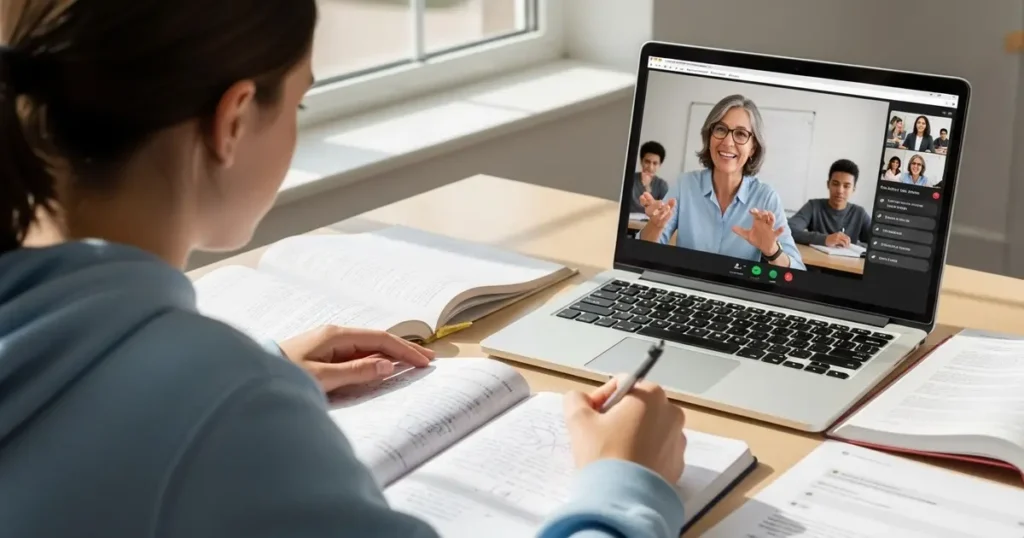
In a physical classroom, a teacher can walk by your desk, see you staring blankly at a worksheet, and ask, “Do you need help?” In online schooling for high school, you are invisible unless you make yourself known.
Self-advocacy is a critical skill for college preparation. Online teachers want to help you, but they rely on you to reach out.
How to Communicate Effectively
- Don’t Wait: If you don’t understand an assignment, email immediately. Do not wait until the night before it is due.
- Be Clear: Instead of saying “I don’t get it,” say, “I am stuck on question 3 regarding the quadratic formula. I tried step one, but I’m confused about step two.”
- Attend Office Hours: Most accredited online high schools offer virtual office hours. These are rarely mandatory, but attending them is the secret weapon for straight-A students. It builds a relationship with the teacher, which can be very helpful when you need a letter of recommendation later.
4. Combat Isolation with Intentional Socializing
A common myth is that online students are lonely. This is only true if you let it happen. Online schooling for high school changes how you socialize, not if you socialize.
Without the hallway chatter and lunchroom noise, you have to be intentional about connecting with peers. This is vital for your mental health.
Staying Connected
- Join Virtual Clubs: Many online schools have debate clubs, e-gaming teams, or coding groups. Join them. It connects you with students who share your specific interests, rather than just the people who happen to live in your zip code.
- Local Activities: Use your flexible schedule to your advantage. You can join local sports leagues, community theater, or volunteer groups during hours when traditional school students are still stuck in a classroom.
- Study Groups: Form a digital study group. Hop on a Zoom call or Discord server with classmates to work through homework together.
5. Taking Breaks and Physical Health
Staring at a screen for eight hours straight is a recipe for burnout and headaches. Your physical well-being is the engine that powers your learning. If the engine breaks down, the car stops.
The 20-20-20 Rule
Eye strain is a real issue in online schooling for high school students. Optometrists recommend the 20-20-20 rule: Every 20 minutes, look at something 20 feet away for at least 20 seconds. This resets your eyes and reduces fatigue.
Movement is Mandatory
Sitting is the new smoking. You need to get your blood flowing to keep your brain sharp.
- Stand up between every class block.
- Do ten jumping jacks or pushups to wake up your nervous system.
- Drink plenty of water. Dehydration leads to brain fog, making assignments take twice as long as they should.

Actionable Advice: Choosing the Right Program
If you are just starting to look into this option, or if you are unhappy with your current setup, you need to ensure the program you choose supports your goals.
Not all online classes are created equal. The most important factor is accreditation. You must look for accredited online high schools. This ensures that the high school diploma you earn is recognized by colleges, universities, and employers. If a school is not accredited, your hard work might not count toward your future.
Key Features to Look For:
- NCAA Approval: If you are a student-athlete hoping to play sports in college, ensure the online courses are NCAA-approved.
- AP and Honors Options: For college preparation, you want a school that offers rigorous coursework.
- Student Support Services: Look for programs that offer guidance counselors and technical support.
Conclusion
Switching to online schooling for high school is an exciting step toward independence. It allows you to customize your education, work at your own pace, and develop self-discipline that will serve you for the rest of your life.
By setting up a proper workspace, managing your time with block schedules, communicating proactively with teachers, and taking care of your physical health, you position yourself for incredible success. Remember, you are in the driver’s seat now. It might take a few weeks to find your rhythm, but once you do, you will likely find that you learn faster and have more time for the things you love.
Take control of your education today—your future self will thank you.
Frequently Asked Questions (FAQ)
Is online schooling for high school harder than traditional school?
It depends on your learning style. The coursework is usually just as challenging, but it requires more self-discipline. Students who struggle with time management often find it harder at first, while self-motivated students often find it easier and more efficient.
Do colleges accept diplomas from online high schools?
Yes, as long as the school is regionally accredited. Admissions officers view diplomas from accredited online high schools the same way they view those from public or private brick-and-mortar schools.
How many hours a day should I spend on online school?
Most successful students spend 4 to 6 hours a day on schoolwork. However, because you don’t have downtime for hallway transitions or assemblies, you can often finish your work faster than a traditional school day.
Can I still participate in extracurricular activities?
Absolutely. Many online schools offer virtual clubs. Additionally, depending on your state laws, you may be allowed to participate in sports and activities at your local public high school even if you are enrolled online.
What is the role of a parent in online high school?
Parents often act as a learning coach. In high school, this role is less about teaching the material and more about monitoring progress, ensuring the student sticks to a schedule, and providing encouragement.