
Teaching ESL at Home: How AI Supports Language Learning
Teaching ESL at home how AI supports language learning is the most powerful way to help students reach fluency today.
By using smart chatbots,
Speech recognition, and automated lesson builders,
Teachers can provide round-the-clock practice and instant feedback.
While the AI handles the repetitive drills,
The human teacher can focus on building the student’s confidence and conversation skills through effective online schooling strategies.

What is AI-Supported ESL Teaching?
AI-powered ESL software adapts to students’ learning pace for effective at-home language acquisition.
Unlike static textbooks, AI picks up on a student’s specific mistakes and adjusts.
This ensures that the work is never too easy or too hard, keeping students focused and motivated in their home learning environment.
According to research on Artificial Intelligence in Education from Wikipedia, adaptive platforms are crucial for personalized instruction.
How does AI support language learning at home?
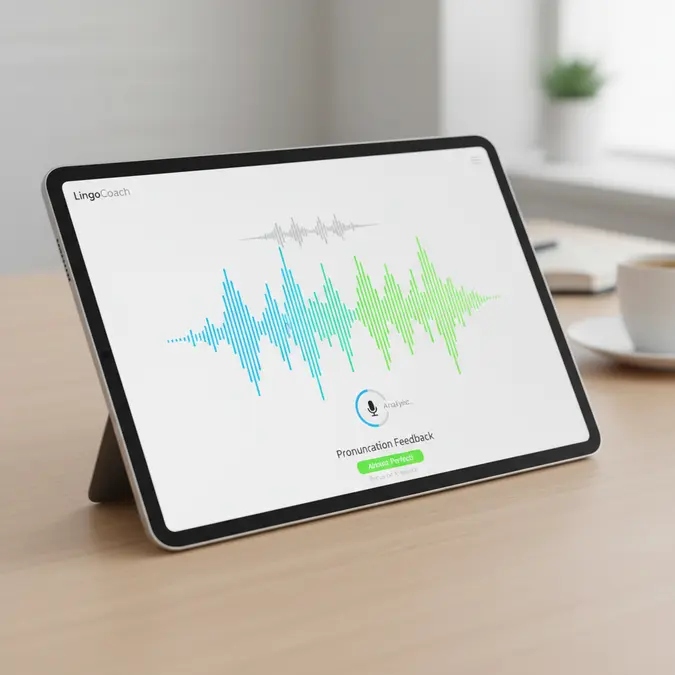
AI supports language learning by providing instant feedback on pronunciation,
Generating personalized grammar exercises, and offering 24/7 conversation practice through chatbots.
These tools act as a digital language lab, allowing students to master vocabulary and speaking skills at their own pace.
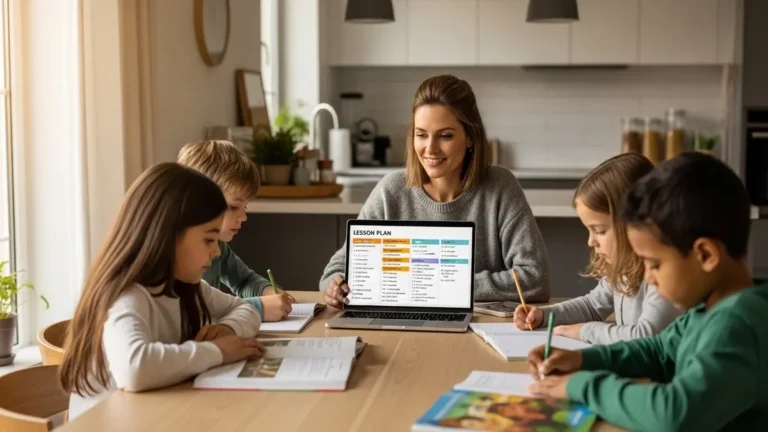
Parents can even use a custom AI lesson planner homeschool system to organize these language modules alongside other subjects.
Key Takeaways
- AI reduces lesson planning time by nearly 70%.
- Instant feedback prevents students from developing bad habits.
- Lessons are automatically customized for every student’s interests.
Your New AI Co-Teacher for Home Lessons
In the past, tutoring from home meant spending hours making worksheets by hand.
Today, that process is much faster.
AI isn’t meant to take your job; it takes the busy work off your plate.
This lets you act more like a coach than a lecturer.
When teaching ESL at home: how AI supports language learning is used correctly, it helps students warm up.
If a student spends 10 minutes talking to one of the best AI tutors for homeschooling before your class, they arrive ready to speak and feel less shy.
Building a Modern Digital Classroom
You don’t need a high-end studio to be a top tutor.
A clean background, good lighting, and a clear microphone are the basics.
The real secret is the digital toolkit.
Using free AI educational tools for homeschooling keeps your main computer screen clear for video calls while providing students with interactive content.
This allows the AI to track student progress in real-time while you lead the lesson.
How AI Saves Time on Custom Lesson Plans
Customizing a reading story for a student used to be a chore.
Now, you can ask an AI to write a story about a specific topic at the exact level your student needs.
For example,
If your student loves soccer,
You can use AI prompts to teach children by generating sports-themed stories that include specific grammar points.
Teaching ESL at home: how AI supports language learning ensures that every lesson stays interesting and relevant to the student’s life.
Overcoming Common Tutoring Challenges
A big hurdle with home learning is staying focused.
Students may get bored or find it hard to stay on track.
AI helps by adding games, goals, and challenges to the curriculum.
These tools turn learning into a habit rather than a task.
By learning how parents track homeschool progress without stress, you can show your students exactly how much they have improved,
Which keeps their spirits high.
For further insights into educational tech standards,
The Office of Educational Technology provides official guidance on classroom innovation.
Best AI Tools for Teaching ESL at Home in 2026
The challenge for most homeschool parents teaching ESL is consistency. A child learning English needs daily exposure, vocabulary practice, speaking time, and immediate correction of errors. No single parent can provide all of this sustainably across a full school day. AI fills that gap by handling the repetitive, high-frequency practice so you can focus on conversation and comprehension.
1. Duolingo
Duolingo remains the most practical daily language tool for homeschool students because of its habit design. The streak system and short lessons create a routine that is easy to maintain. For elementary and middle school students, 15 minutes of Duolingo daily produces measurable vocabulary growth over a semester. The free version is sufficient for most homeschool use cases.
2. ChatGPT for Conversation Practice
This is one of the most underused applications of AI in homeschool ESL. You can instruct ChatGPT to hold an entire conversation in English, correct errors in real time, and explain grammar rules whenever a mistake happens. This works especially well for high school students who already have basic vocabulary and need conversational fluency practice.
A simple prompt to start: “Talk to me only in English. Correct any grammar mistakes I make and explain why they were wrong. Keep sentences simple.”
3. Google Socratic
Socratic by Google allows students to photograph text or type questions and receive clear, level-appropriate explanations with visual aids. For ESL students who encounter an unfamiliar English word or concept, Socratic gives an explanation that does not require advanced English to understand. It is free and works on both Android and iOS.
4. Diffit for Reading Level Adjustment
Diffit is especially powerful for ESL learners because it generates reading passages at adjustable reading levels. You enter any topic and Diffit produces a passage your ESL student can actually read and understand — not too easy, not overwhelming. It also generates comprehension questions and vocabulary lists automatically, saving significant lesson preparation time.
A Simple ESL Daily Routine Using AI
Structure makes language learning stick. Here is a 60-minute daily ESL routine that uses AI tools effectively:
- 15 minutes Duolingo — vocabulary and grammar review to start the day
- 15 minutes Diffit reading — read a leveled passage on the day’s topic, answer comprehension questions
- 20 minutes ChatGPT conversation — discuss the reading topic in English, receive real-time corrections
- 10 minutes review — parent reviews the ChatGPT conversation log and highlights recurring mistakes
This routine requires under 10 minutes of parent preparation and delivers consistent, high-quality daily English practice for the student.
How AI Handles the Biggest ESL Challenges
Pronunciation Practice
Several AI tools now include speech recognition that evaluates pronunciation. Google’s Read Along app is free and specifically designed for early readers — it listens as a child reads aloud and provides gentle feedback when words are mispronounced. For older students, speaking practice through voice-enabled ChatGPT on mobile provides real-time conversational feedback.
Grammar Correction Without Embarrassment
One of the most significant benefits of AI-based ESL practice is that students are not embarrassed to make mistakes in front of a machine. Many ESL learners are reluctant to practice speaking because they fear judgment. AI removes that barrier entirely. A student can make the same grammar mistake fifty times, receive patient correction each time, and gradually internalize the correct form without any social discomfort.
Vocabulary in Context
Vocabulary learned in isolation is quickly forgotten. AI tools like ChatGPT and Diffit consistently present new vocabulary in context — within sentences, passages, and conversations that give the word meaning and make it easier to remember. This is significantly more effective for long-term retention than flashcard-based memorization.
Frequently Asked Questions: Teaching ESL at Home With AI
At what age can children start using AI for ESL?
Most AI language tools are appropriate from age 6 or 7 onward with parental supervision. Google’s Read Along is specifically designed for early readers ages 5 and up. Duolingo has a family plan suitable for young children. ChatGPT-based conversation practice works best for age 10 and above when children have enough basic English to form simple sentences.
Can AI fully replace an ESL teacher?
No — and it should not try to. AI handles drill, repetition, feedback, and vocabulary practice extremely well. What it cannot provide is the cultural context, emotional encouragement, and relationship-based motivation that a human teacher gives. The most effective homeschool ESL approach combines AI for daily practice with regular human conversation time — even 15 minutes of parent-child English conversation daily makes a measurable difference.
For more AI tools to support your homeschool, read our guide to the best AI tools for homeschool parents and our list of free AI lesson planners.
Views: 0