
Special needs homeschooling can be challenging for parents.
Every child has a unique learning style, and traditional teaching methods often don’t fit all learners.
This is where AI tools for special needs homeschooling make a real difference.
AI-powered tools help create personalized lessons, improve focus, and support children with learning differences such as autism, ADHD, and dyslexia – all in a flexible, stress-free way at home.
This guide explains how AI works for special needs homeschooling, its benefits, real-life use cases, safety tips, and best practices for parents.
What Are AI Tools for Special Needs Homeschooling?
AI (Artificial Intelligence) tools use smart technology to understand how a child learns and then adapt lessons based on that data. Instead of fixed lessons, AI adjusts content to match a child’s pace, strengths, and challenges.
These tools can:
- Simplify difficult concepts
- Repeat lessons patiently
- Adjust difficulty automatically
- Use visuals, audio, and interactive activities
This makes learning more accessible and comfortable for children with special needs.
How AI Helps Special Needs Homeschooling (Step-by-Step)
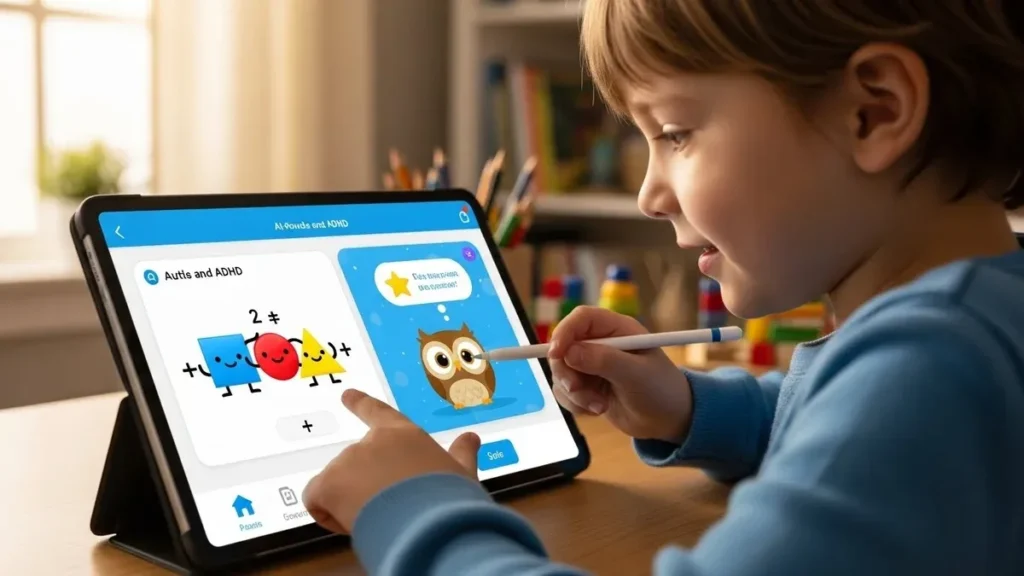
1. Personalized Learning Paths
AI analyzes progress and creates personalized learning paths tailored to the child. If a child struggles, the tool slows down and changes the teaching style.
2. Better Focus and Engagement
Interactive lessons, animations, and voice support help children stay engaged, especially those with attention challenges.
3. Self-Paced Learning
Children can repeat lessons as many times as needed without pressure. This builds confidence and reduces frustration.
4. Instant Feedback
AI provides immediate feedback, helping children understand mistakes in a positive and supportive way.
Benefits of AI for Special Needs Homeschooling
✔ Benefits for Children
- Builds confidence
- Reduces learning anxiety
- Improves understanding
- Encourages independent learning
✔ Benefits for Parents
- Saves lesson planning time
- Reduces teaching stress
- Tracks progress easily
- Supports multiple learning styles
AI supports parents but never replaces their role.
Best Use Cases of AI in Special Needs Homeschooling

🧩 Autism Spectrum
AI tools provide structured routines, visual schedules, and predictable lesson patterns, helping children feel safe and focused.
⚡ ADHD
Short lessons, interactive tasks, and gamified activities help maintain attention and interest.
📖 Dyslexia
Text-to-speech, speech-to-text, and reading support features make learning easier and less stressful.
🧠 Learning Delays
AI patiently repeats lessons and adjusts difficulty until the child understands the topic.
Real-Life Ways Parents Use AI at Home
- Creating daily lesson plans quickly
- Generating customized worksheets
- Practicing reading with voice-based tools
- Tracking learning progress automatically
Many parents combine AI tools with hands-on learning, like art, movement, and outdoor activities.
Common Mistakes to Avoid
- Relying only on AI without parent involvement
- Using too many tools at once
- Ignoring screen-time balance
- Not reviewing AI-generated content
AI works best with active parent guidance.
Safety & Best Practices
- Choose child-friendly AI tools
- Avoid sharing personal data
- Monitor screen time regularly
- Review lessons before use
- Balance digital learning with offline activities
Safety and supervision are always important.
Frequently Asked Questions (FAQs)
Is AI safe for special needs homeschooling?
Yes, when parents supervise and use trusted tools.
Can AI replace teachers or parents?
No. AI is a support tool, not a replacement for human guidance.
Is AI suitable for young children?
Yes, with age-appropriate tools and time limits.
Can AI help non-verbal children?
Some tools support visual communication and speech assistance.
How long should children use AI tools daily?
Short, focused sessions with breaks work best.
Final Thoughts
AI tools for special needs homeschooling help make learning more personalized, flexible, and supportive. When used correctly, AI can reduce stress for parents and help children grow at their own pace — academically and emotionally.
Start small, stay consistent, and focus on what works best for your child.