
AI Supported Homeschooling – The Hidden Fix When Traditional Support Falls Short
If you spend even a few minutes reading online discussions about homeschooling, you’ll notice a familiar theme:
“Parents aren’t qualified.”
“Homeschooling ruins kids.”
“Most parents simply can’t handle it.”
And for some families, those statements come from very real pain.
But here’s the part that rarely gets said out loud:
Homeschooling doesn’t usually fail because parents don’t care or aren’t capable.
It fails because parents are expected to do everything alone.
That expectation is outdated.
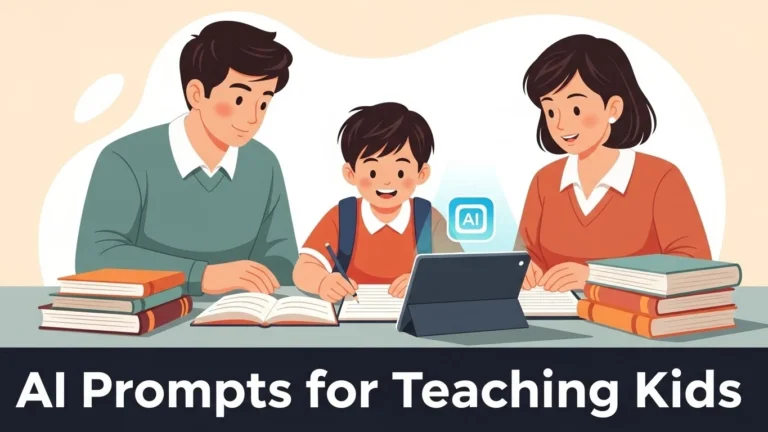
Learning in 2026 does not look like learning did 20 years ago. With the rise of AI-Supported Homeschooling, parents are no longer alone in this journey.
And once support systems—especially AI tools—are added, the conversation changes completely.
AI-Supported Homeschooling provides resources and tools that empower parents and enhance the learning experience for children.
The Outdated Picture of Homeschooling Still Shapes the Debate
Many people still imagine homeschooling like this:
- One parent acting as a full-time teacher
- Long school-style hours at the kitchen table
- Textbooks, worksheets, and constant pressure
- No backup when the parent gets stuck or overwhelmed
In that setup, burnout isn’t a possibility—it’s almost guaranteed.
But modern homeschooling doesn’t work like that anymore.
Today, successful homeschooling looks less like “school at home” and more like guided learning with smart support.
Parents Were Never Meant to Be Full-Time Teachers
Let’s say this clearly:
Most parents are not trained educators.
They may not remember algebra formulas.
They may struggle to explain grammar rules.
They may feel insecure teaching science or writing.
And that’s completely okay.
Because modern homeschooling doesn’t require parents to deliver every lesson themselves.
Instead, parents act as:
- Learning guides
- Decision-makers
- Emotional support
- Environment designers
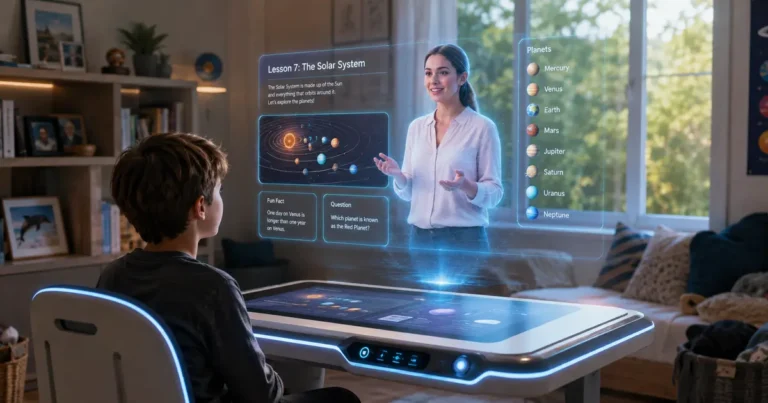
The actual explaining, repeating, and adapting of lessons can now be handled by AI tools.
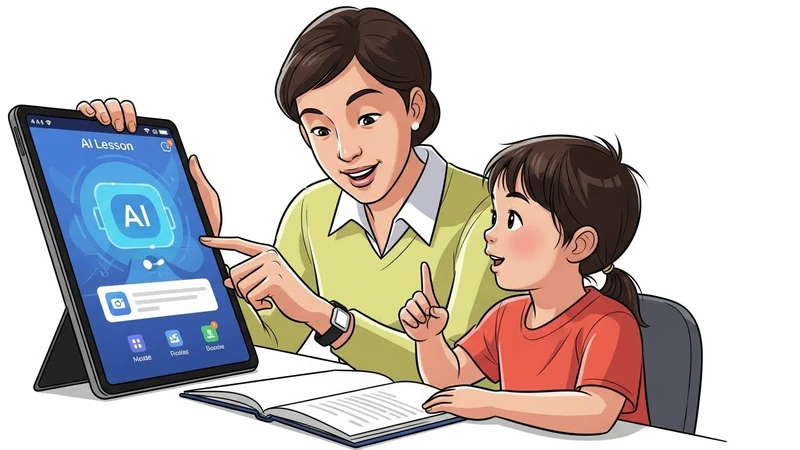
How AI Changes the Role of the Parent
When families use AI correctly, something important happens:
pressure shifts away from the parent.
Instead of thinking,
“I have to know this to teach it.”
parents can think,
“I just need the right support to help my child understand.”
For example, tools like ChatGPT are often used as on-demand learning assistants.
They can:
- Explain math problems step by step
- Rephrase lessons in simpler language
- Answer follow-up questions without frustration
- Adjust explanations to match how a child learns
This doesn’t replace parenting.
It removes unnecessary stress.
Time, Energy, and the Burnout Problem
One of the biggest fears parents have is time.
“How will I teach my child and still manage life?”
“How will I keep up every single day?”
The truth is:
If homeschooling is treated like a traditional school schedule, it becomes exhausting fast.
But AI-supported homeschooling works differently.
Instead of long hours, families use:
- Short focus blocks (20–30 minutes)
- Independent learning sessions
- Flexible pacing
- Auto-generated plans
This often leads to:
- Better focus
- Less resistance
- Fewer power struggles
- More energy left for family life
Learning becomes part of the day—not the entire day.
Mental Health and Flexibility Matter More Than Perfection
Another common claim is that homeschooling isn’t possible if a parent struggles with mental health, attention issues, or low energy.
What often gets ignored is this:
Rigid systems usually make those challenges worse.
AI-supported learning allows for:
- Adjusted expectations
- Lighter days when needed
- Visual schedules instead of constant reminders
- Smaller, achievable goals
That flexibility doesn’t lower standards.
It creates consistency without forcing perfection.
And consistency—not perfection—is what children actually need.
“Kids Don’t Want to Be Homeschooled” — What Kids Really Want
Most kids don’t want:
- Isolation
- Boredom
- Constant pressure
- Feeling behind or rushed
Those problems aren’t exclusive to any one learning environment.
Healthy homeschooling includes:
- Group activities
- Clubs and sports
- Online collaborative learning
- Community classes
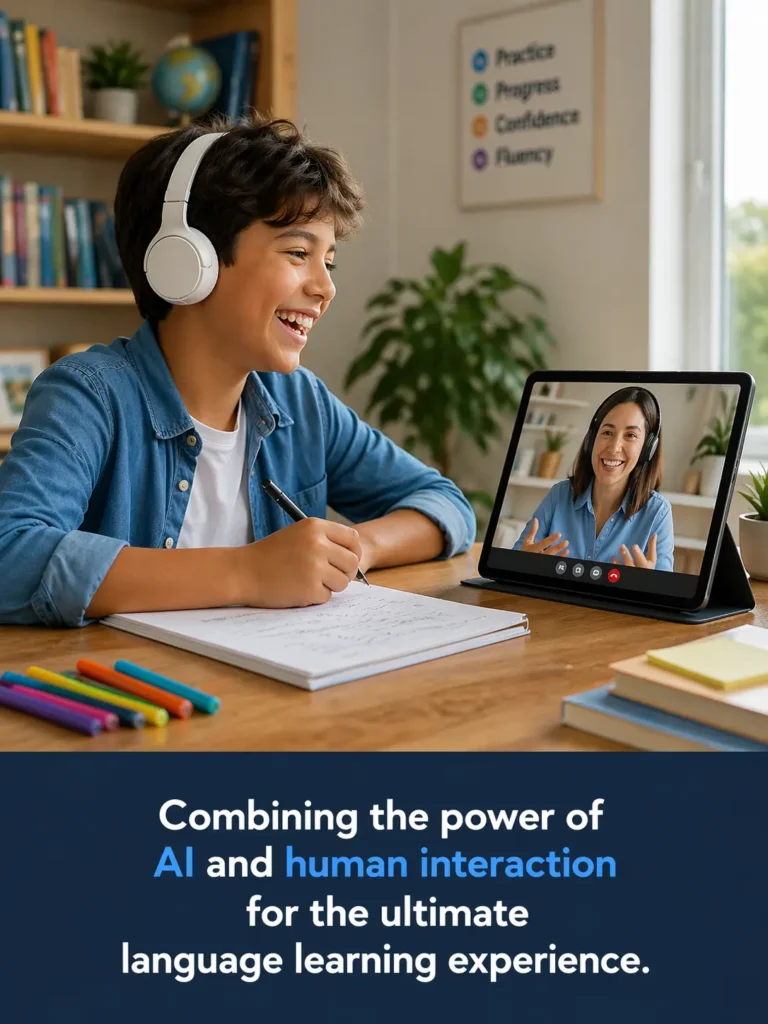
AI supports academic learning.
Social connection still happens in the real world.
The two are not opposites—they work best together.
AI Tools That Support Learning Without Replacing Parents
(This section fits naturally after explaining the parent-as-guide model.)
AI Tools That Help Homeschooling Actually Work
Modern homeschooling doesn’t depend on one magic app.
It depends on smart support tools used intentionally.
Here’s how families commonly use AI tools in daily learning:

1. ChatGPT — Everyday Learning Support
This tool is often used as a calm, patient helper.
Parents and kids use it to:
- Break down difficult topics
- Practice math or writing skills
- Get explanations in plain language
- Explore curiosity-based questions
It reduces frustration and builds confidence—especially for kids who hesitate to ask questions repeatedly.
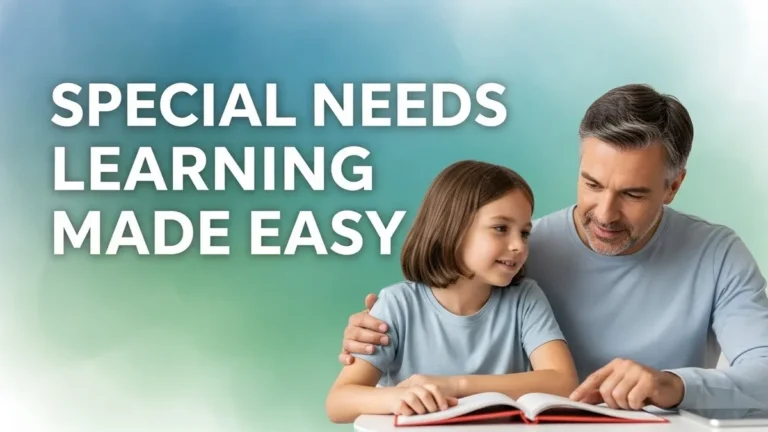
2. Visual and Reading Support Tools
Some children struggle with text-heavy lessons.
AI-powered reading and visual tools help by:
- Turning text into audio
- Highlighting key ideas
- Supporting different learning styles
Parents often notice better engagement and less resistance when learning feels accessible.
3. AI Lesson Planning and Task Breakdown Tools
Planning is one of the fastest ways parents burn out.
AI planning tools can:
- Turn big goals into small steps
- Suggest realistic daily plans
- Adjust workload automatically
Instead of asking, “Did we do enough?”
Parents can focus on, “Did today feel manageable?”
4. Organization and Routine Support Tools
Consistency matters—but rigidity doesn’t.
AI-assisted organization tools help create:
- Visual routines
- Gentle reminders
- Predictable structure
They support flexibility while keeping learning on track.
Why AI Doesn’t Replace Teaching or Parenting
AI can explain concepts.
It cannot:
- Build trust
- Notice emotional overload
- Encourage effort
- Model values
That role stays with the parent.
AI handles the heavy lifting.
Parents handle the connection.
That balance is what makes homeschooling sustainable.
When Homeschooling Truly Fails
Homeschooling usually struggles when:
- Parents try to do everything themselves
- Support tools are ignored
- Expectations are unrealistic
- Comparison with traditional school never stops
It works best when:
- Learning is flexible
- Tools are used intentionally
- Progress matters more than perfection
The difference isn’t motivation—it’s support.
Homeschooling Isn’t for Everyone—and That’s Okay
It’s important to say this clearly:
Homeschooling is not the right choice for every family.
Some children thrive in traditional classrooms.
Some parents prefer external structure.
However, saying that homeschooling never works overlooks how learning has evolved.
With modern tools, families now have options that didn’t exist before.

Final Thoughts: The Question Has Changed
The real question isn’t:
Can parents replace a school system?
The better question is:
Can parents create a healthier learning environment with the right support?
In many homes today, the answer is yes.
Not because parents are perfect.
But because they are no longer alo
5 Situations Where AI Supported Homeschooling Makes the Biggest Difference
1. When Your Child Is Behind in a Core Subject
If your child is significantly behind grade level in math or reading, AI adaptive tools can identify exactly where the gap starts and work backward systematically. Rather than repeating the entire grade level, tools like Khanmigo and StarSpark identify the specific missing concepts and address only those. This targeted approach can close gaps in weeks rather than the months that whole-grade repetition requires.
2. When You Are Teaching a Subject You Never Studied
Every homeschool parent eventually hits a subject they are not confident in. For most parents, this is high school algebra, chemistry, or upper-level writing. AI tutors handle the direct subject instruction in these cases while you focus on the broader educational guidance. Khanmigo covers all K-12 subjects at no cost. For math specifically, StarSpark AI and Math Academy provide structured, adaptive instruction that replaces the need for deep parent expertise.
Try StarSpark AI — Handles Math Instruction So You Do Not Have To
3. When You Have Multiple Children at Different Levels
Teaching three children at three different grade levels simultaneously is genuinely difficult without support. AI tools that adapt to each child independently — like Khanmigo, StarSpark, and Diffit — effectively give each child their own teaching assistant. While one child works with Khanmigo on science, another practices math with StarSpark, and you focus on the third child who needs direct instruction in reading.
4. When Your Child Resists Learning From You
Some children — especially older ones — resist correction or instruction from a parent in a way they do not resist from a teacher or a tool. If you have noticed that your child learns the same content better from a video or a software program than from you, AI tutoring can be a genuinely useful workaround. The content is the same. The delivery removes the parent-child dynamic that is causing friction.
5. When Your Planning Time Has Disappeared
Life happens. New babies, family illness, work demands, and unexpected events all reduce the time available for lesson planning. AI lesson planners like MagicSchool AI can generate a full week of lesson plans across all subjects in under 15 minutes. For families going through a difficult period, this is the difference between maintaining educational continuity and falling behind entirely.
Frequently Asked Questions
How do I know if AI supported homeschooling is working?
Look for three signals: your child can explain concepts in their own words after AI sessions (not just complete exercises), their progress dashboard shows consistent advancement week over week, and your planning and teaching time is meaningfully reduced. If all three are true, the tools are working. If any one is missing, adjust which tools you are using or how you are using them.
Can AI replace a homeschool parent?
No. AI handles subject delivery, practice, and planning logistics. It does not provide the relationship, values, judgment, and personal knowledge of your child that make homeschooling educationally effective. The most successful AI-supported homeschool families use AI to handle the parts that do not require a parent’s presence, freeing that presence for the parts that do.
Related: Best AI tools for homeschool parents and our free AI lesson planners guide.
Views: 0